Demodex Blepharitis: Causes, Symptoms & Treatment
Demodex blepharitis is eyelid inflammation caused by an overgrowth of microscopic Demodex mites living in the eyelash follicles. Its defining sign is collarettes, the waxy cylindrical debris that wraps around the base of the lashes.
Typical symptoms include itching that is worst on waking, red and swollen lid margins, crusting, and a gritty feeling. An eye doctor confirms it with a slit-lamp exam, and prescription lotilaner eye drops now treat it directly.
Key Takeaways
- Collarettes at the lash base are the one sign that points specifically to Demodex, not to other kinds of blepharitis.
- The mites are far too small to see. Diagnosis depends on a slit-lamp exam, not on what you can spot in the mirror.
- Demodex blepharitis is common and often missed. In one US multicenter chart review, 44% of patients found to have collarettes had never been diagnosed with blepharitis.
- Lotilaner ophthalmic solution 0.25% (Xdemvy) is the first FDA-approved treatment that targets the mites themselves, dosed twice daily for six weeks.
- Because Demodex mites live on nearly everyone, the realistic goal is long-term control through eyelid hygiene, not permanent eradication.
What Demodex Blepharitis Is, and Why It Gets Missed
Two species of mite live on human skin. Demodex folliculorum settles in the eyelash follicle itself. Demodex brevis burrows deeper, into the meibomian oil glands inside the eyelid. Both are roughly 0.3 mm long, which is about the thickness of three sheets of paper stacked together.
Their presence is not the problem. Most adults carry a few, and mite numbers climb steadily with age. Trouble starts when the population outgrows what the eyelid can tolerate. Mites feed on follicular cells and lid oils, mechanically irritating the follicle. Their waste and the bacteria they carry then drive an inflammatory response in the lid margin.
That inflammation is why Demodex is now recognized as the most common cause of blepharitis. In the Titan study, a retrospective review of 1,032 consecutive patients across six US eye clinics, 58% had collarettes, and the rate rose to 69% among patients already carrying a blepharitis diagnosis. Notably, 44% of the patients with collarettes had never been told they had blepharitis at all.
Two misconceptions keep the condition underdiagnosed. The first is that it reflects poor hygiene. It does not. Mite counts track with age, skin type, and conditions such as rosacea far more than with how carefully someone washes. The second is that lid symptoms are simply “dry eye,” so patients get lubricating drops that soothe the surface while the mite population at the lash base keeps growing.
Blepharitis Symptoms: What Demodex Feels Like and Looks Like
The symptom pattern is distinctive once you know what to listen for. Demodex mites avoid light and emerge to mate on the skin surface overnight, which is why the complaints cluster around waking.
- Itching along the lash line, typically worst in the first hour after waking. This is the single most common symptom.
- Crusting and matting of the lashes overnight
- Red, thickened, or swollen lid margins
- A gritty or foreign-body sensation, sometimes with reflex tearing
- Vision that fluctuates and clears with a blink
- Lashes that grow in the wrong direction, thin out, or fall out
- Recurrent styes and chalazia from repeatedly blocked oil glands
- Contact lenses that turn uncomfortable earlier in the day than they used to
Symptoms alone will not distinguish Demodex from staphylococcal or seborrheic blepharitis. One clinical sign does.
Collarettes on the Eyelashes: The Sign That Confirms It
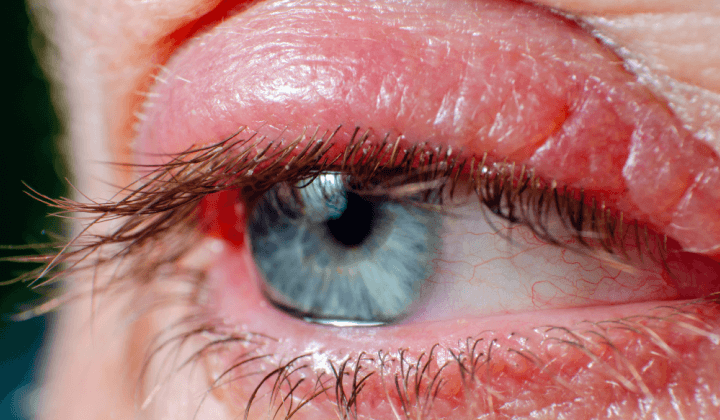
Collarettes are translucent, waxy cuffs of hardened material that wrap the base of an eyelash like a tiny sleeve. They are made of mite waste and follicular debris pushed up as the lash grows, and they are considered pathognomonic, meaning they point to Demodex and nothing else.
Ordinary scurf and dandruff-type flakes sit loosely on the lid margin and shift when touched. A collarette moves with the lash because it is attached to it.
This distinction matters clinically. It is the difference between an eyelid that needs a mite-directed treatment and one that needs an antibacterial approach.
Can You See Eyelash Mites Without a Microscope?
No. At about three-tenths of a millimeter, a Demodex mite is well below the resolution of the unaided eye, and it spends its day buried head-down in a follicle where nothing is visible from outside. Photos online showing translucent, cigar-shaped creatures with stubby legs are magnified hundreds of times under a microscope.
What you can sometimes see at home is the debris. In good light with a magnifying mirror, look for pale, crusty cuffs at the very base of the lashes rather than flakes further out. Confirmation requires a slit-lamp examination, and the technique matters: the examiner asks you to look down, which rotates the upper lid margin into view and exposes the lash roots where collarettes hide.
If you have had chronic lid irritation for months without a clear answer, it is reasonable to ask specifically whether collarettes were checked at your last comprehensive eye exam. In research settings, lashes are epilated and examined under a microscope to count mites, but this is rarely necessary in routine care.
How Do You Get Rid of Demodex Mites on Eyelashes?
Effective treatment works on two fronts at once: reducing the mite population, and clearing the debris and inflammation the mites have already caused. Nothing is instant, because any treatment has to outlast the mite life cycle, which runs roughly two to three weeks from egg to adult.
Lotilaner Eye Drops (Xdemvy)
In July 2023, the FDA approved lotilaner ophthalmic solution 0.25%, marketed as Xdemvy, as the first prescription treatment indicated for Demodex blepharitis. Lotilaner is an isoxazoline ectoparasiticide. It blocks GABA-gated chloride channels that are selective to the mite, paralyzing and killing it without a comparable target in human cells.
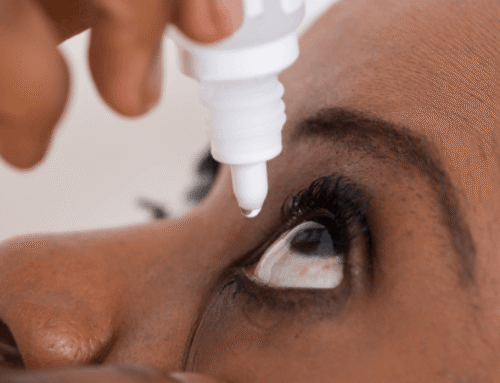
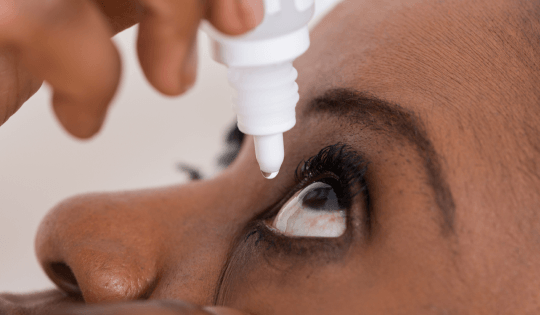
The dosing regimen is one drop in each eye twice daily, about 12 hours apart, for six weeks. Approval rested on two randomized, vehicle-controlled trials, Saturn-1 and Saturn-2, enrolling 833 patients. By day 43, collarette cure was reached by 44% and 55% of treated patients across the two trials, compared with 7% and 12% on vehicle. Mite eradication reached 68% and 50%, versus 17% and 14%. The most commonly reported side effect was stinging or burning on instillation.
Those numbers are worth reading honestly. Roughly half of treated patients reach a complete cure in six weeks, which is a large improvement over anything previously available, but it is not everyone, and some patients need a second course later.
In-Office Lid Exfoliation and Gland Treatment
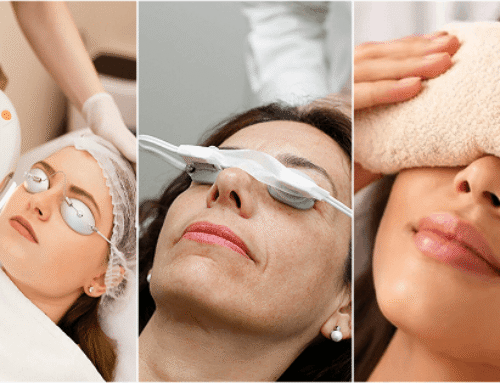
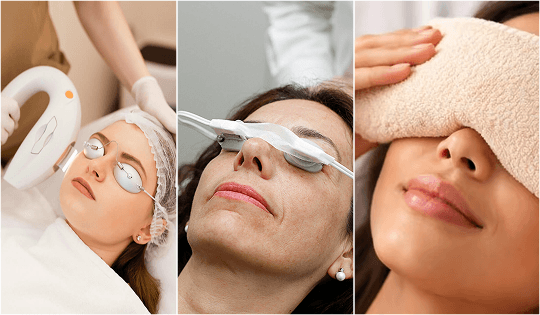
Mechanical debridement of the lid margin, often called microblepharoexfoliation and performed with a device such as BlephEx, removes the biofilm and collarettes that drops alone can take weeks to clear. It gives fast symptomatic relief and is frequently paired with medical therapy rather than used instead of it.
When Demodex has already damaged the oil glands, treating the resulting meibomian gland dysfunction becomes part of the plan, using warm compresses, thermal pulsation, or intense pulsed light. Many patients with long-standing lid disease also need ongoing dry eye treatment once the mite burden is under control, since the tear film rarely recovers on its own.
Is Tea Tree Oil Safe for Eyelid Mites?
Tea tree oil is the traditional home remedy, and its active component, terpinen-4-ol, does kill Demodex in laboratory conditions. In practice it comes with two real problems.
The first is efficacy. In the Titan study, 75% of patients already using tea tree oil products still had collarettes, which suggests over-the-counter formulations frequently fail to control the infestation on their own.
The second is safety. Laboratory work has shown terpinen-4-ol to be toxic to human corneal and meibomian gland epithelial cells in a dose- and time-dependent way, and there is a published case of corneal epithelial defects following off-label use of 50% tea tree oil on the lids.
Undiluted or high-concentration tea tree oil should never go near the eye, and diluted products can still cause allergic contact dermatitis and irritation.
The reasonable position: a commercially formulated, low-concentration lid cleanser used under supervision is a legitimate maintenance tool. Mixing your own tea tree oil solution at home is not, and any oil-based product should be kept off the ocular surface itself.
Building an Eyelid Hygiene Routine You Will Actually Keep
Whatever the prescription plan, daily lid hygiene is what holds the result. The routine below takes about two minutes and matters most in the evening, when the day’s debris and cosmetics are still on the lid.
- Warm compress. Hold a clean, comfortably warm compress against closed lids for 5 to 10 minutes to soften hardened oil and crust. A microwavable eye mask holds heat better than a washcloth, which cools within a minute.
- Clean the lid margin, not the eyelid skin. Use a preservative-free lid cleanser or hypochlorous acid spray on a clean pad and work along the lash line itself, where the debris sits. Cleaning only the outer skin misses the target entirely.
- Use a separate pad for each eye and discard it. Reusing a pad or cloth moves debris from one lid to the other.
- Apply prescribed drops afterward, waiting at least five minutes between different ophthalmic medications.
- Wash pillowcases and face towels in hot water weekly, and avoid sharing them during active treatment.
A few habits deserve extra attention. Replace mascara every three months and never share eye cosmetics, since old product harbors debris and bacteria at the lash line.
Waterproof formulas and heavy eyeliner applied inside the lash line are particular offenders, and lash extensions with their adhesive make thorough lid cleaning close to impossible. Our guide to how beauty products affect eye health covers this in more detail. If you have rosacea, treating the facial skin condition alongside the lids tends to improve both, since the two share a strong association.
Set an expectation for the timeline. Crusting and itching often ease within two to three weeks. Lid redness and gland function take longer, sometimes several months, because inflamed tissue heals slowly even after the trigger is gone.
Frequently Asked Questions
Does blepharitis ever go away permanently?
Usually not in the sense of a permanent cure. Demodex mites are normal residents of human skin, so eliminating them completely is neither realistic nor the goal. What treatment achieves is bringing the population back below the threshold that causes inflammation. Many patients stay comfortable for months or years afterward with maintenance lid hygiene, and some need a repeat course of treatment if symptoms return. Think of it as a chronic condition that is well controlled rather than one that is finished.
Is Demodex blepharitis contagious?
Not in the usual sense. Mites can transfer through prolonged close contact or shared pillows, towels, and eye cosmetics, but nearly every adult already carries some Demodex, so exposure is not the deciding factor. Whether you develop symptoms depends on your own skin biology, age, and immune response. Household members do not need treatment unless they have symptoms of their own.
Can I wear eye makeup or contact lenses during treatment?
Contact lens wear is usually possible, though your eye doctor may ask you to reduce wearing time while the lid margin is inflamed, and lotilaner drops should be instilled with lenses out. Eye makeup is best paused or minimized during an active course, especially eyeliner applied to the inner lash line. If you continue wearing it, remove it completely each night before lid cleaning.
Does Demodex blepharitis cause dry eye?
It frequently contributes to it. Demodex brevis colonizes the meibomian glands that produce the oil layer of the tear film. When those glands become inflamed or blocked, tears evaporate too quickly, producing burning, fluctuating vision, and paradoxical watering. This is one reason lubricating drops alone often fail to resolve the symptoms. Treating the mites addresses the upstream cause.
How soon will I feel better after starting treatment?
Some patients notice less itching within the first two weeks. In the lotilaner trials, measurable collarette reduction appeared by day 15 in a subset of patients, with the main results assessed at day 43. Complete the full course even if you feel better early, because stopping partway allows the surviving mite population to rebound.
The bottom line.
Chronically itchy, crusty, red eyelids that come back every few weeks are not something to manage indefinitely with warm compresses and hope. If collarettes are present, there is now a specific diagnosis and a specific treatment for it. The practical next steps are straightforward: look at your lash bases in a magnifying mirror in good light, note whether symptoms peak in the morning, and bring both observations to your appointment.
Ask directly whether your lid margins were examined for collarettes, since the sign is easy to miss when the exam is focused elsewhere.
Village Eyecare treats blepharitis, meibomian gland dysfunction, and ocular surface disease across five Chicago locations, with in-office lid exfoliation and thermal treatment available alongside prescription therapy. Make an appointment to have your lid margins evaluated and get a treatment plan matched to what is actually driving your symptoms.