GLP-1 Medications and Your Eyes: What Ozempic, Wegovy and Mounjaro Users Should Watch For in 2026
Quick answer
Most people taking a GLP-1 medication never develop an eye problem. The most common issue is temporary blurry vision caused by shifting blood sugar. Two rarer concerns matter more: early worsening of existing diabetic retinopathy after a fast HbA1c drop, and a very rare optic nerve condition called NAION that European and UK regulators have now linked to semaglutide. Sudden, painless vision loss always needs same-day eye care.
Key Takeaways
- Blurry vision in the first few weeks is usually a focusing shift caused by falling blood sugar, not damage. It typically settles as your glucose stabilises.
- If you have diabetes, get a dilated retinal exam before starting or soon after. The American Diabetes Association’s 2026 Standards of Care advise assessing retinopathy status when treatment is intensified with a GLP-1.
- NAION is a very rare optic nerve stroke. The EMA (2025) and the UK’s MHRA (February 2026) classify it as a very rare side effect of semaglutide, estimated at up to roughly 1 in 10,000 people treated per year.
- The evidence is mixed, not settled. Large trial meta-analyses and health-record studies have not consistently reproduced the increased risk found in some clinic-based studies. Trial data for tirzepatide (Mounjaro) so far show no retinopathy signal.
- Sudden, painless loss of vision in one eye is an emergency. Do not stop your medication on your own, call your prescriber and get examined the same day.
What the 2026 evidence actually shows about GLP-1s and eye problems
Three separate issues get collapsed into one online. They have different causes, different timelines and very different levels of proof. Separating them is the fastest way to understand your own risk.
Blurry vision after starting a GLP-1 is usually a focusing shift, not damage
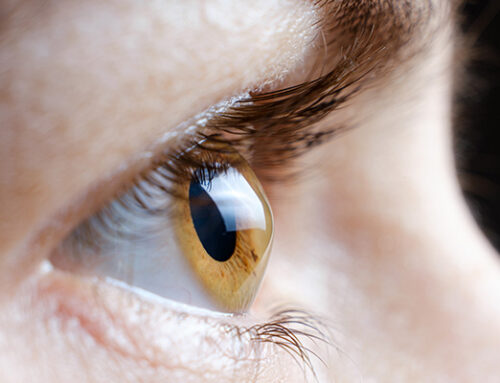
This is the most common eye complaint among new GLP-1 users, and it is almost always temporary. When blood glucose drops quickly, the water content of the eye’s natural lens changes, which alters its focusing power. Vision can turn blurry or fluctuate through the day for several weeks until glucose levels settle. The same effect is well documented when anyone starts intensive diabetes treatment, including insulin.
Practical implication: hold off on buying new glasses until your blood sugar has been stable for roughly four to six weeks, or you may pay for a prescription that no longer fits. If your blurry vision is worsening rather than settling, affects only one eye, or comes with pain, floaters or a dark patch, that is a different problem and needs prompt examination.
Rapid blood sugar improvement can temporarily worsen existing diabetic retinopathy
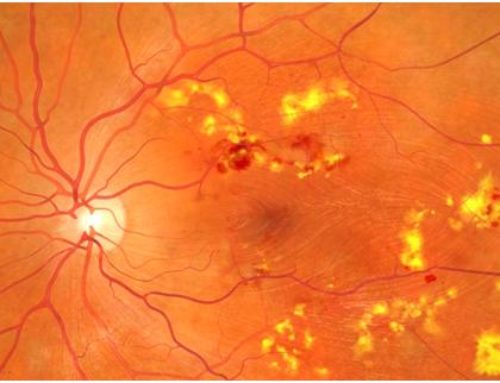
Yes — and this is established, well-replicated evidence that predates GLP-1s entirely. Landmark intensive-control trials in the 1990s showed a phenomenon called early worsening: when a long-standing high HbA1c falls sharply, existing retinopathy can deteriorate for six to twelve months before the long-term protective benefit takes over.
Semaglutide’s cardiovascular outcome trial, SUSTAIN-6, reported more retinopathy complications in the treatment group (hazard ratio 1.76). Importantly, those events clustered in a specific group: people who already had diabetic retinopathy at baseline, were taking insulin, started with a high HbA1c, and experienced a large early drop. Most researchers read this as the early-worsening effect of fast glucose correction rather than a direct toxic effect of the drug on the retina.
Broader data are reassuring. A 2025 systematic review in JAMA Ophthalmology pooling 78 randomised trials and more than 73,000 participants found no overall increase in eye disorders or diabetic retinopathy with semaglutide.
A large multi-database study published in late 2025, covering over 810,000 people starting semaglutide, found rates of proliferative retinopathy similar to or lower than comparison medications.
Tirzepatide looks at least as favourable. The SURPASS-CVOT retina substudy, presented at the American Diabetes Association meeting in June 2026, found two-step retinopathy worsening in 21.3% of tirzepatide users versus 23.3% on dulaglutide over 36 months no significant difference.
A separate retrospective analysis published in Ophthalmology in February 2026 found lower rates of new and progressing retinopathy among tirzepatide users, though that is an association, not proof that the drug protects the retina.
The dedicated trial designed to settle this question, FOCUS, is not expected to report until 2027. Until then, the practical takeaway is that the risk depends far more on the eye you start with than on the drug itself. Someone with no retinopathy and a modest HbA1c reduction has very little to worry about. Someone with moderate retinopathy or diabetic macular edema and an HbA1c heading from 10% to 7% deserves closer monitoring.
NAION: what regulators concluded, and what is still uncertain
NAION stands for non-arteritic anterior ischaemic optic neuropathy. It happens when blood flow to the front of the optic nerve is interrupted, causing sudden, painless loss of vision in one eye often described as blurring, clouding or a dark area, frequently noticed on waking. Vision loss is usually permanent, and no treatment has been shown to restore visual acuity.
Here is how the picture developed:
- 2024: A retrospective study in JAMA Ophthalmology from a single specialist neuro-ophthalmology centre reported a substantially higher rate of NAION among patients prescribed semaglutide. A Scandinavian cohort later reported roughly double the risk.
- June 2025: The European Medicines Agency’s safety committee (PRAC) concluded NAION is a very rare side effect of semaglutide and required it be added to the product information for Ozempic, Rybelsus and Wegovy, with advice to stop treatment if NAION is confirmed.
- February 2026: The UK’s MHRA issued a Drug Safety Update reaching the same conclusion, estimating the risk at up to about 1 in 10,000 people treated. For context, its Yellow Card scheme had received three suggestive reports by August 2025 against an estimated 10.2 million packs dispensed over five years.
- July 2026: Australia’s TGA updated product information after its advisory committee concluded the evidence may support the signal for semaglutide, but not for dulaglutide or tirzepatide.
- United States: The FDA has identified NAION as a potential safety signal for the GLP-1 class and reported that it was evaluating whether regulatory action is warranted. As of publication, US prescribing information for Ozempic, Wegovy and Rybelsus does not carry a NAION warning. Because labels change, check the current FDA label or ask your pharmacist.
Association is not the same as causation, and the counterevidence is real. The 78-trial meta-analysis was statistically underpowered to detect an event this rare, and several large database studies have found no association at all. There is also a confounding problem that is hard to escape: people prescribed semaglutide disproportionately have obesity, type 2 diabetes, sleep apnoea and hypertension every one of which independently raises NAION risk.
A crowded optic nerve head, sometimes called a “disc at risk,” is another strong anatomical predisposition that has nothing to do with medication.
The American Academy of Ophthalmology and the North American Neuro-Ophthalmology Society have explicitly declined to endorse a blanket recommendation that everyone who develops NAION stop semaglutide, noting that discontinuation carries its own significant health risks. Their position is shared decision-making between you, your prescriber and your eye doctor.
Should you get an eye exam before starting a GLP-1?
If you have diabetes, yes. A dilated retinal examination before you start, or within the first few months, is sensible and consistent with the ADA’s 2026 Standards of Care, which advise assessing retinopathy status when glucose-lowering therapy is intensified with a GLP-1. If you are taking a GLP-1 purely for weight management and do not have diabetes, no guideline currently requires a pre-treatment exam but a baseline is worth having if you carry other risk factors.
Prioritise a baseline exam if any of these apply:
- You already have any level of diabetic retinopathy or macular edema
- Your HbA1c is high (roughly 9% or above) and expected to fall quickly
- You have long-standing type 2 diabetes, or you take insulin
- You have had NAION in one eye the fellow eye carries roughly a 20% lifetime risk regardless of any medication
- You have sleep apnoea, uncontrolled hypertension, or have been told you have a small, crowded optic disc
- You have not had a dilated exam in more than a year
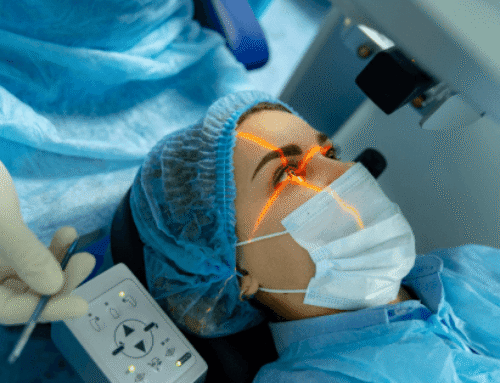
A baseline visit is not a formality. A dilated eye exam with retinal imaging documents exactly where your retina and optic nerves stand today, which is what makes any later change interpretable. If you have diabetes, a diabetic eye exam adds targeted screening for the specific changes that high blood sugar causes.
Where you have no diabetes, a standard comprehensive eye exam is enough. A reasonable pattern is a baseline, then a follow-up around three to six months in if you had retinopathy at the start or your HbA1c fell steeply though your own schedule should be set by your eye doctor, not by an article.
Symptoms that need same-day attention
Do not wait for a routine appointment if you notice:
- Sudden, painless loss of vision, or a dark or grey area, in one eye
- A curtain or shadow moving across part of your field of view
- A sudden shower of new floaters, or flashes of light
- New double vision, or eye pain accompanying a vision change
- Blurring that is steadily worsening rather than settling over a few weeks
These symptoms need urgent eye care the same day, ideally from an optometrist, ophthalmologist or hospital eye service. Two practical points. First, do not stop your GLP-1 on your own initiative that decision belongs with the clinician who prescribed it, weighed against your cardiovascular and metabolic risks.
Second, if your GLP-1 was prescribed privately or through a telehealth service, it may not appear in your main medical record, so tell the examining clinician you are taking it. Regulators have flagged this specific gap.
Frequently asked questions
Can Ozempic cause vision loss?
Permanent vision loss from Ozempic is very rare, and causation has not been proven. European and UK regulators have concluded that semaglutide is associated with NAION, an optic nerve condition that can cause permanent loss of vision in one eye, at an estimated rate of up to about 1 in 10,000 treated people per year. Far more commonly, semaglutide users experience temporary blurring from blood sugar changes, which resolves. Any sudden vision loss needs same-day assessment regardless of cause.
What is NAION, and is it linked to semaglutide?
NAION is a loss of blood supply to the front of the optic nerve, causing abrupt, painless vision loss in one eye that is usually permanent. Regulators in Europe, the UK and Australia have added it to semaglutide product information as a very rare side effect. The link is an established association, not a demonstrated cause — studies conflict, and people who take semaglutide already carry several independent NAION risk factors, including diabetes, obesity, hypertension and sleep apnoea.
Should I get an eye exam before starting a GLP-1?
If you have diabetes, a dilated exam before starting or shortly afterwards is advisable and aligns with ADA 2026 guidance on intensifying glucose-lowering therapy. If you do not have diabetes, it is optional but worthwhile when you have other risk factors, such as prior NAION, sleep apnoea or uncontrolled blood pressure. A baseline record makes any future change far easier to interpret.
Why did my vision get blurry after starting Wegovy?
Most often because your blood sugar changed. Shifting glucose alters the water content and focusing power of the eye’s lens, producing blurred or fluctuating vision that usually settles within weeks. Dehydration from nausea or reduced fluid intake can also aggravate dry eye, which blurs vision intermittently. Blurring confined to one eye, worsening over time, or accompanied by pain or floaters is not this benign pattern and should be examined promptly.
Does a rapid blood sugar drop worsen diabetic retinopathy?
It can, temporarily, in people who already have retinopathy. This early-worsening effect was documented in intensive-control trials long before GLP-1s existed and is thought to explain much of the retinopathy signal seen in SUSTAIN-6. It does not mean you should avoid improving your control the long-term benefit of lower HbA1c to your eyes is substantial. It means the pace of improvement should be monitored, with retinal checks scheduled around the transition.
The bottom line, and your next three steps
GLP-1 medications deliver real, well-documented benefits for blood sugar, weight and cardiovascular risk. The eye risks that have emerged are either temporary and self-resolving, manageable with monitoring, or very rare and still scientifically unsettled. None of them is a reason to abandon a medication that is working for you, and none of them should be dismissed either.
What to do now:
- Book a baseline exam. Especially if you have diabetes, are about to start, or started within the past few months. Ask for retinal imaging so there is a record to compare against.
- Tell every clinician you take a GLP-1. Add it to your medication list, including privately or telehealth-prescribed doses, and mention it at every eye appointment.
- Learn the red flags and act on them the same day. Sudden painless vision loss in one eye, a shadow or curtain, or new floaters and flashes are emergencies not something to raise at your next routine visit.
Village Eyecare has five Chicago locations and offers dilated diabetic and comprehensive eye exams as well as same day urgent eye care. If you are starting, or already taking, a GLP-1 and want a clear baseline on your eye health, Book an appointment with our team.