Blue Light Glasses: Myths vs Facts and Do They Really Help Your Eyes?
If you’ve been on a phone, laptop, or TV for any amount of time lately, you’ve probably heard about blue light glasses. They’re everywhere! Marketed as a way to reduce eye strain, protect your eyes, and even improve sleep.
But do they actually work?
The short answer: they can help but it depends on your symptoms and how you use them.
Let’s break it down in a simple, honest way.
What Is Blue Light?
Blue light is part of the natural light spectrum. The biggest source is actually the sun, but it’s also emitted in smaller amounts from:
- Phones
- Computers
- TVs
- LED lighting
It’s not harmful in normal amounts. In fact, it helps regulate your sleep and alertness during the day.
The issue today isn’t blue light itself it’s how much time we spend on screens, especially in the evening.
What Are Blue Light Glasses Supposed to Do?
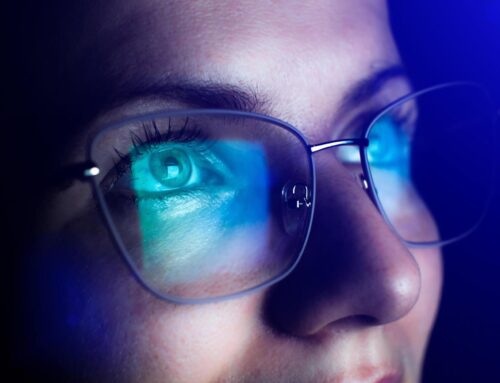
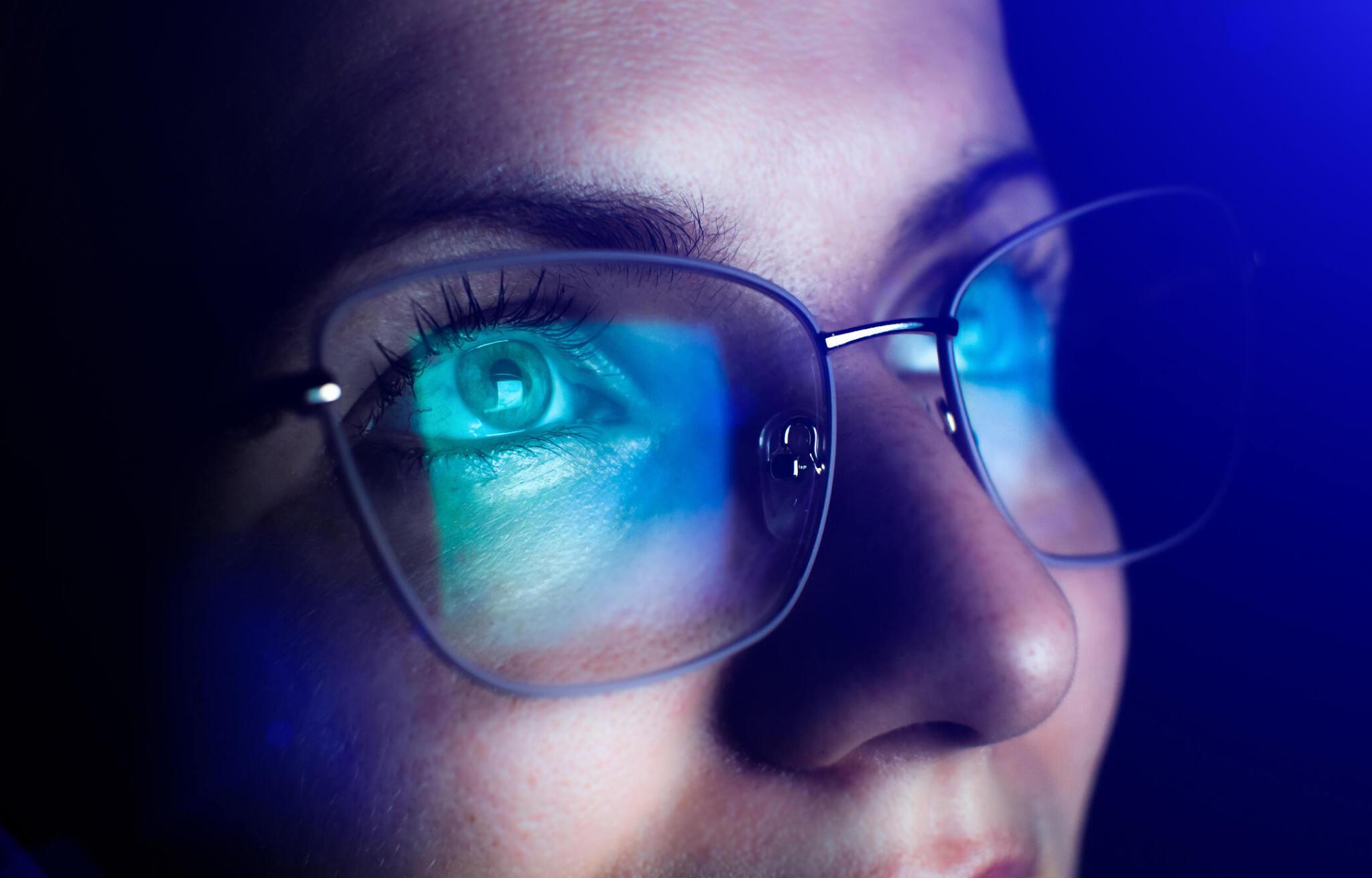
Blue light glasses are designed to reduce the amount of blue light that reaches your eyes from screens.
Patients often use them to help with:
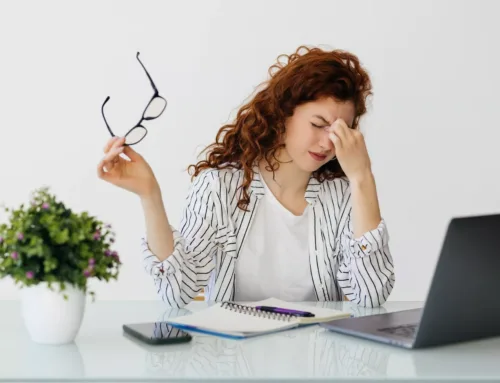
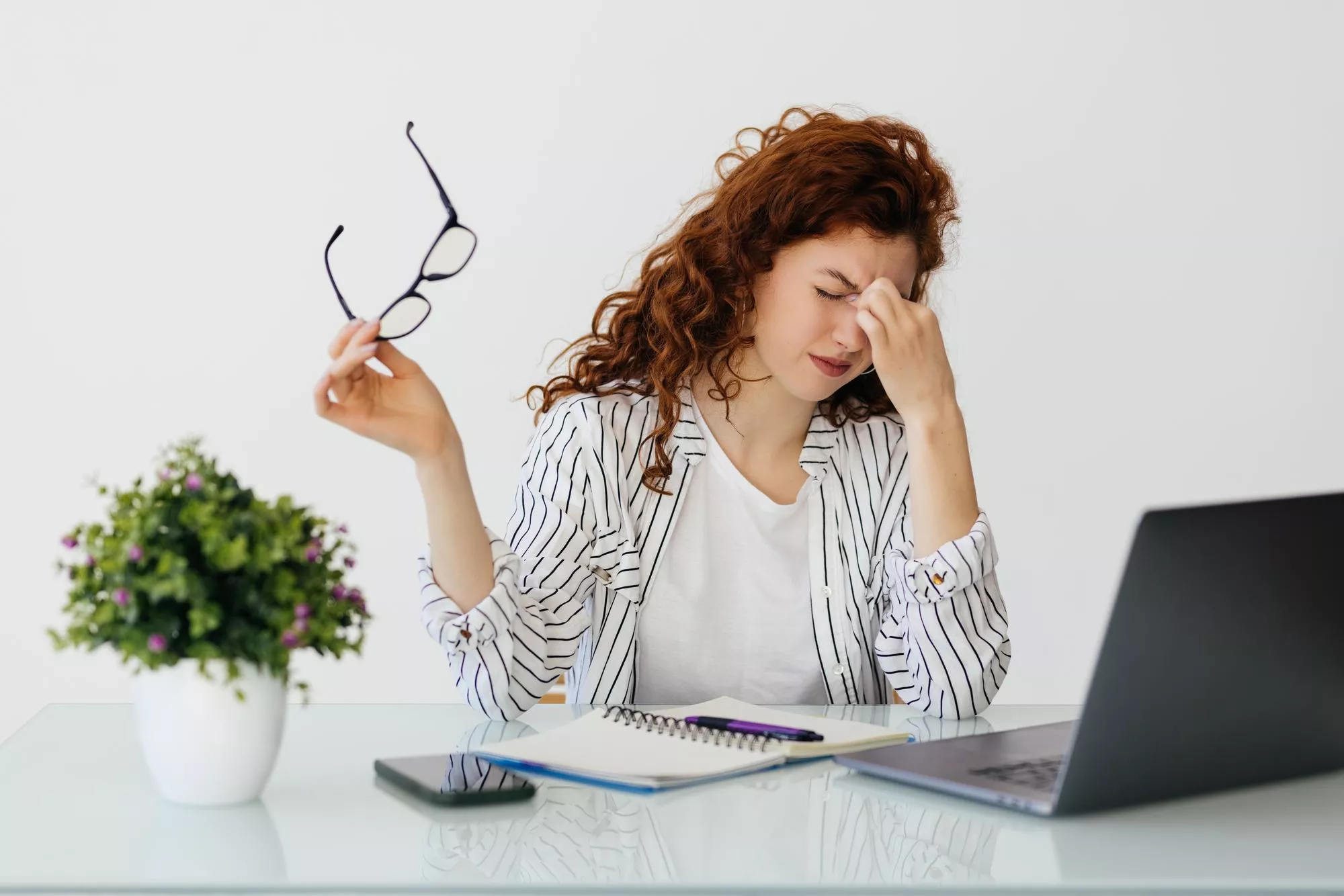
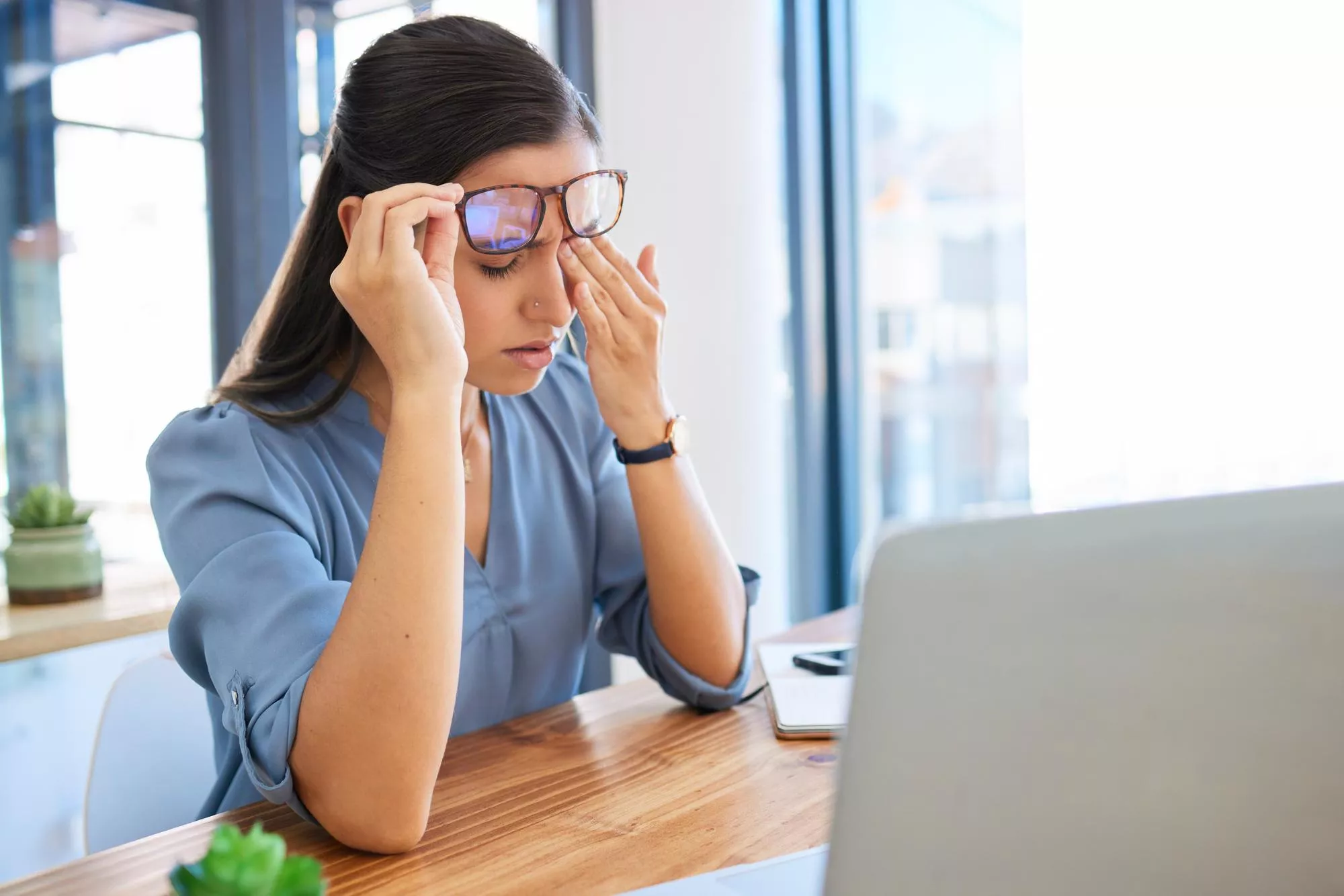
- Eye fatigue after screen use
- Headaches from long computer work
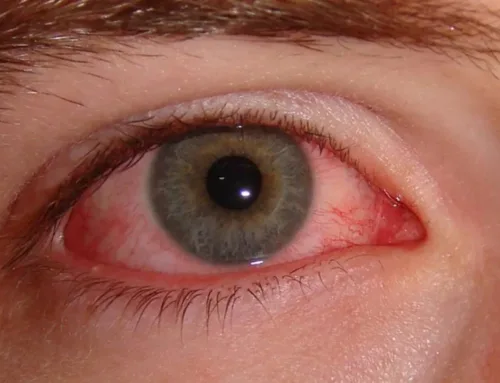
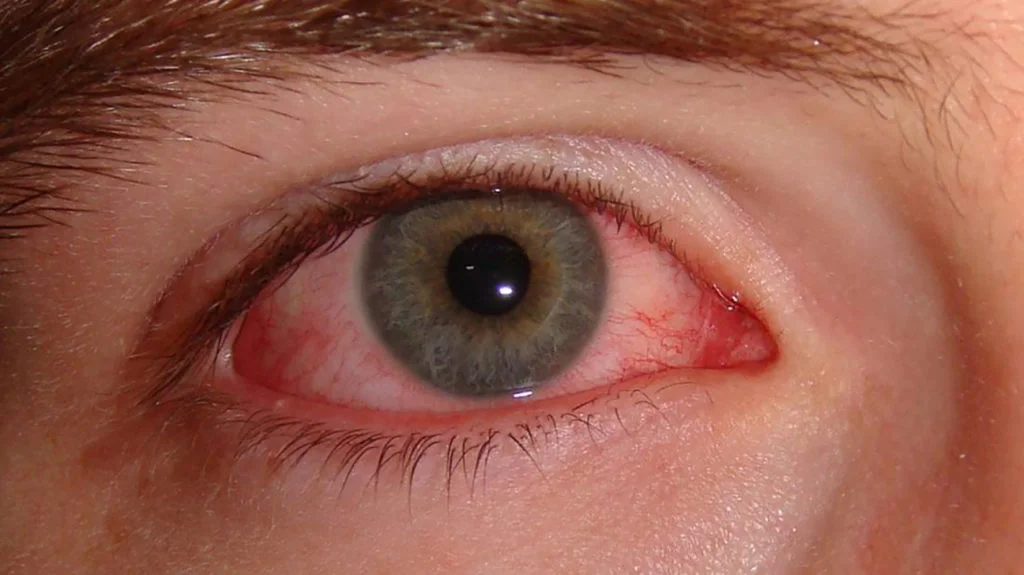
- Dry or tired eyes
- Evening screen use before bed
While they don’t “cure” digital eye strain, many people do notice that their eyes feel more comfortable when wearing them especially during long workdays.
What Actually Causes Digital Eye Strain?
Most discomfort from screens isn’t just about light it’s about how we use them.
Common causes include:
- Not blinking enough while focusing on screens
- Long, uninterrupted screen time
- Dry eye symptoms (very common)
- Poor lighting or screen positioning
- An outdated glasses prescription
That’s why two people can have the same screen time but only one feels symptoms.
Do Blue Light Glasses Actually Help?
For many patients, yes they can help improve comfort.
Blue light glasses may:
- Reduce glare and harsh screen brightness
- Help decrease eye fatigue during long screen use
- Make evening screen time feel more comfortable
- Support better visual comfort in certain lighting conditions
They’re not a medical “fix,” but they can be a helpful tool especially for people who are on screens all day for work or school.
Sleep and Screen Time
Some people also use blue light glasses in the evening to help with sleep.
Blue light exposure at night can affect your body’s natural sleep rhythm, especially when using phones or laptops before bed.
That said, the biggest improvements usually come from:
- Reducing screen time before bed
- Using night mode or warmer screen settings
- Lowering screen brightness in the evening
Blue light glasses can be part of that routine, but they work best alongside healthy screen habits.
Are Blue Light Glasses Worth It?
For many patients at Village Eyecare, the answer is yes—especially if you:
- Work on a computer all day
- Experience tired or strained eyes after screen use
- Get headaches from long screen sessions
- Spend time on devices in the evening
They’re a simple way to make screen time more comfortable.
However, they work best when combined with the right prescription and a healthy eye care routine.
Blue Light Glasses at Village Eyecare
We offer blue light–filtering lenses in a variety of styles, whether you need:
- Prescription glasses
- Non-prescription computer glasses
- Or an upgrade added to your current frames
Our team can help you choose lenses that fit your daily routine and visual needs.
If Screen Time Is Affecting Your Eyes
If you’re spending hours on digital devices and noticing eye fatigue, they may be a simple upgrade that makes a real difference.
And if you’re not sure what’s causing your symptoms, we’re here to help you figure it out.
Schedule an eye exam at Village Eyecare or stop in to explore blue light lens options that fit your lifestyle.