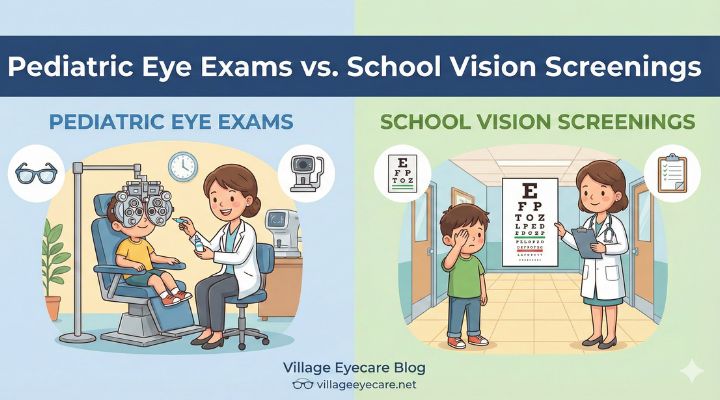
Every year, kids across the country line up in school hallways to read letters off a chart. It takes only a few minutes, it checks a few simple boxes, and it makes parents feel like children’s eye health is taken care of.
While school vision screenings are valuable—they often catch obvious distance vision problems—they were never designed to replace a comprehensive pediatric eye exam.
Many families understandably assume that if their child “passed,” everything must be fine. But here’s the reality: a child can pass a school vision screening and still have vision problems that affect reading, learning, attention, and even behavior.
School Screenings vs. Comprehensive Pediatric Eye Exams
School screenings are meant to do one thing: identify kids who might not see clearly at a distance. They’re not intended to diagnose vision problems, evaluate eye health for kids, or understand how a child’s eyes function in real-life situations like reading a book or concentrating during class.
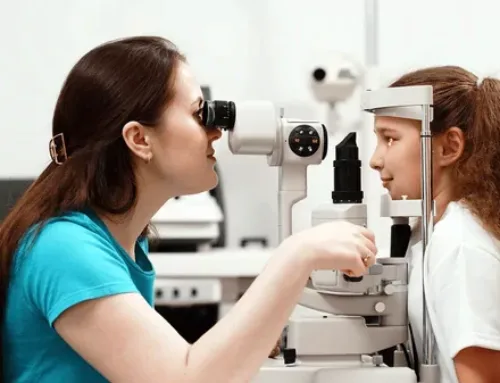
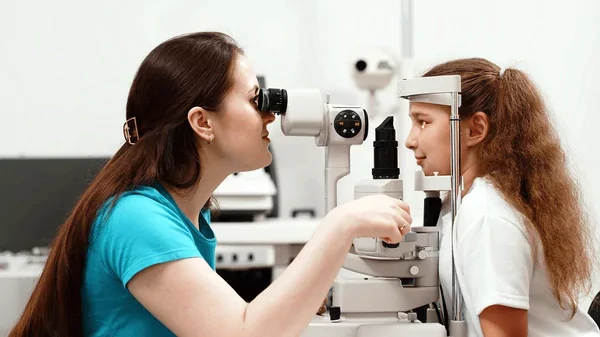
A comprehensive pediatric eye exam takes time, uses specialized equipment, and looks at things screenings simply can’t touch. Near vision, eye teaming, eye tracking, focusing ability, depth perception, color vision, and overall vision in children these are all areas that dramatically affect how a child sees and learns.
Because so much of childhood learning is visual, any weakness in these areas can create challenges that go unnoticed for years.
Children Rarely Recognize Vision Problems
Parents often think kids will tell them if something is wrong with their eyes. The truth is, children rarely know when their vision isn’t functioning optimally.
If the words move on the page, if they feel tired while reading, or if their vision blurs during homework, they often assume that’s normal.
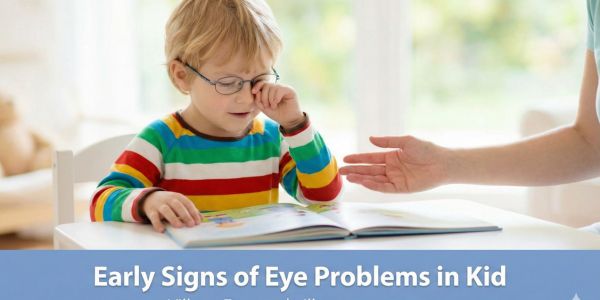
Instead, symptoms show up in subtle ways:
- Avoiding reading or homework
- Losing their place on the page
- Complaining of headaches
- Appearing inattentive or unmotivated
These issues may be mistaken for behavioral or attention problems. But a pediatric eye exam can identify the underlying vision problems and provide effective solutions, like corrective lenses or vision therapy.
Vision and Learning Go Hand in Hand
Up to 80% of learning in the classroom relies on vision. Children constantly shift focus—copying from the board, reading textbooks, completing worksheets, or using tablets and computers.
Their eyes need to work together efficiently, track smoothly, and maintain focus for long periods.
When any part of the visual system isn’t functioning properly, school becomes unnecessarily difficult. A comprehensive eye exam for children evaluates not just clarity of sight, but how comfortably and efficiently the eyes work—information that school screenings cannot provide.
Screen Time Makes Eye Exams More Important
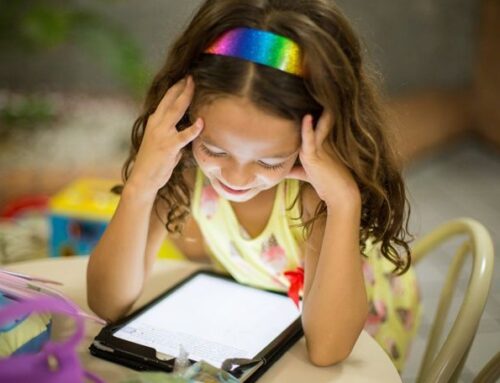
In today’s digital age, children’s eyes are under more strain than ever. Tablets, laptops, and smartphones increase the risk of:
- Eye fatigue
- Blurry near vision
- Dry eyes
- Rapidly progressing nearsightedness (myopia)
A pediatric eye checkup can monitor these changes, provide strategies to reduce eye strain, and detect early signs of myopia or other vision problems. Early intervention is crucial to maintaining healthy vision and preventing long-term issues.
Eye Health Matters, Even Without Symptoms
Clear vision is only part of the picture. Comprehensive children’s eye exams also evaluate eye health. Pediatric eye doctors can detect early signs of:
- Amblyopia (“lazy eye”)
- Strabismus (eye misalignment)
- Convergence insufficiency
- Astigmatism
- Pediatric eye diseases
- Changes in the retina or optic nerve
Many of these conditions show no obvious symptoms initially. Detecting them early ensures the best outcomes for treatment and long-term eye health.
The Peace of Mind That Comes With a Full Exam
A full pediatric eye exam gives parents confidence that their child’s vision is clear, healthy, and developing normally. It ensures children can learn comfortably, focus at school, and engage in sports and daily activities without hidden vision struggles.
Kids grow fast, and their eyes change rapidly. Relying solely on school screenings is like seeing only part of the story. Comprehensive pediatric eye exams give the complete picture.
Bottom Line
School vision screenings are helpful, but they’re only a starting point. A comprehensive pediatric eye exam ensures your child is seeing clearly, learning effectively, and staying healthy—both now and in the years to come.
If it’s been over a year since your child’s last children’s eye exam, now is the perfect time to schedule one. Their vision shapes every moment of daily life—make sure they’re seeing their best.