Choosing the right contact lenses is about more than just your prescription, it’s about finding a material that fits your eyes, lifestyle, and comfort needs. With so many options available, it can feel overwhelming.
This guide breaks down the most common contact lens materials and helps you find the best fit for your eyes.
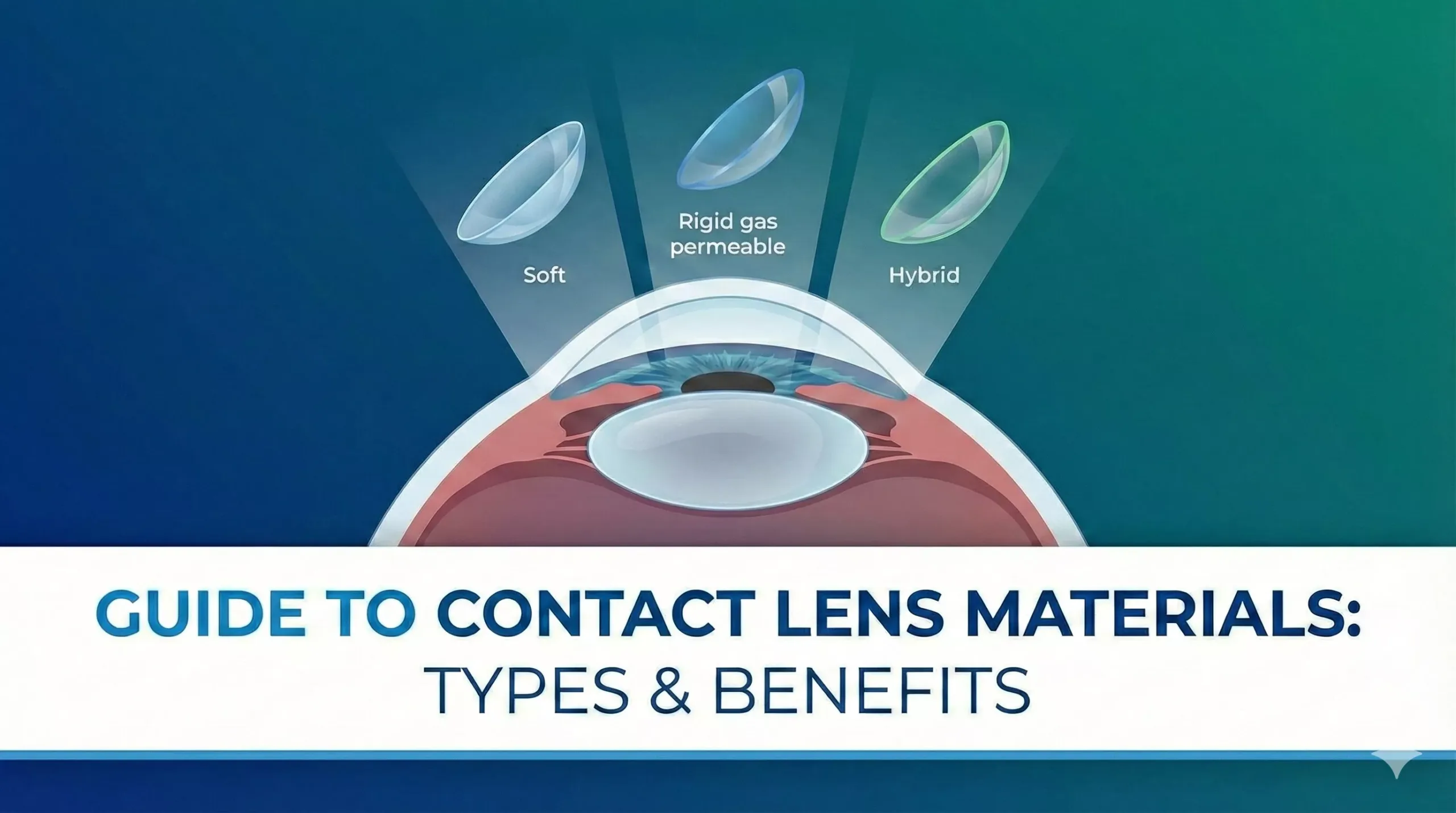
Soft Contact Lenses
Soft contact lenses are the most popular option for a reason. Made from water-containing plastics called hydrogels or silicone hydrogels, they are flexible, lightweight, and comfortable. Because they conform closely to the surface of your eye, they often feel natural right from the start.
Silicone hydrogel lenses, in particular, allow more oxygen to reach your eyes, keeping them healthier throughout the day. Soft lenses are available in daily, bi-weekly, or monthly replacement schedules, giving you options depending on your lifestyle and convenience needs.
They are generally suitable for a wide range of prescriptions, including mild astigmatism, making them a versatile choice for most wearers.
Rigid Gas Permeable (RGP) Lenses
Rigid gas permeable lenses, or RGP lenses, are firmer and smaller than soft lenses. While they may take a short period to adjust to, they provide exceptionally sharp vision, especially for people with astigmatism or other unique vision challenges.
RGP lenses are durable, resistant to protein buildup, and often last longer than soft lenses, making them a cost-effective choice over time. They also have the added benefit of helping slow the progression of certain conditions, such as keratoconus. While they may feel different initially, many wearers find the clarity and longevity well worth the adjustment.
Hybrid Lenses
Hybrid lenses are designed to combine the best of both worlds. With a rigid center for clear vision and a soft skirt for comfort, they offer a stable, comfortable fit that can accommodate irregular corneas.
Many people who struggle with RGP lenses find hybrid lenses easier to adapt to. They provide the sharp vision of RGP lenses without sacrificing comfort, making them a great option for those who want precision vision correction with a smoother wearing experience.
Scleral Lenses
Scleral lenses are large-diameter lenses that rest on the white part of the eye (the sclera) instead of the cornea. These lenses are highly customizable, providing exceptional comfort for people with complex vision needs or irregular corneas.
Because scleral lenses vault over the cornea, they can correct conditions like keratoconus or post-surgical irregularities, while also helping to relieve severe dry eye symptoms. They are stable on the eye and can provide all-day comfort, making them an excellent choice for patients who have struggled with other lens types.
Specialty Lenses and Options
In addition to standard lens materials, there are specialty lenses designed for specific needs. Toric lenses are ideal for correcting astigmatism, while multifocal lenses help with presbyopia, or age-related near vision changes.
Daily disposable lenses offer convenience and hygiene, reducing the risk of infection, while colored lenses can enhance or change eye color while still providing vision correction.
When selecting specialty lenses, it’s important to discuss your lifestyle, vision needs, and comfort preferences with your optometrist to find the best solution.
Choosing the Right Lens Material
Finding the perfect contact lens material depends on several factors. Consider your lifestyle—do you spend long hours in front of screens or outdoors in variable conditions?
Eye health is another factor: dry eyes, sensitivity, or certain medical conditions can limit your options.
Vision needs like astigmatism, presbyopia, or irregular corneas may require specialized lenses. Finally, think about comfort, convenience, and budget—daily, weekly, or monthly lenses each come with their own benefits.
Your optometrist is the best person to guide you toward the lenses that fit your eyes, prescription, and lifestyle perfectly. A professional fitting ensures both comfort and long-term eye health.
Conclusion
Choosing the right contact lens material can make a significant difference in comfort, vision clarity, and overall eye health. Whether you’re a first-time wearer or exploring new options, understanding your choices and consulting with your optometrist will help you see—and feel—your best every day.