Many parents assume that if their child isn’t complaining about their eyesight, their vision must be fine. But children often don’t realize they’re seeing the world differently than others. They simply adapt. As a result, undiagnosed vision issues can quietly interfere with a child’s ability to learn, focus, and thrive in school.
Vision plays a major role in everyday classroom tasks, and when problems go unnoticed, they can lead to frustration, behavioral issues, or poor academic performance.
Understanding how vision and learning are connected is the first step toward ensuring your child reaches their full potential.
Vision Is More Than Just 20/20
When most people think of vision, they think of clarity. Whether a child can see the board or read a book. But learning requires much more than clear eyesight. Children use over a dozen visual skills every day, including:
- Eye tracking
- Depth perception
- Visual focus
- Visual processing
- Hand–eye coordination
A weakness in any of these areas can affect how a child reads, writes, learns, and interacts with the world.
How Vision Problems Affect Learning?
1. Reading Difficulties
Children with vision issues may skip lines, lose their place, misread words, or avoid reading altogether. What looks like a reading disability may actually be difficulty coordinating the eyes.
2. Trouble Focusing in Class
If a child’s eyes cannot maintain clear focus, they may appear distracted or inattentive. Teachers may mistake this for ADHD or lack of effort.
3. Headaches and Eye Strain
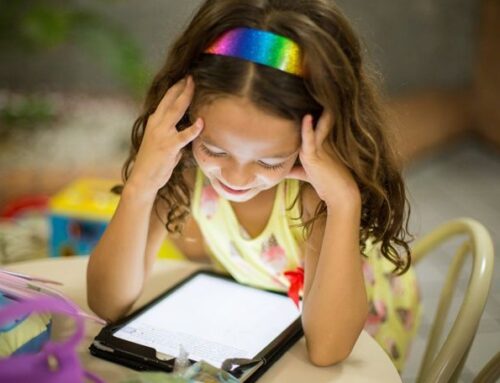
Frequent headaches, rubbing the eyes, or fatigue after short periods of reading or screen time can all be signs of undiagnosed visual strain.
4. Poor Handwriting
When the eyes struggle to work together, it’s harder to write neatly, copy from the board, or stay within the lines.
5. Difficulty with Sports and Coordination
Vision plays a big role in balance and timing. A child who struggles with hand-eye coordination may have an underlying vision problem affecting performance.
6. Behavioral or Emotional Frustration
A child who can’t articulate what’s wrong may act out, avoid schoolwork, or feel discouraged. Vision challenges can mimic learning or behavioral disorders.
Why These Issues Often Go Undetected?
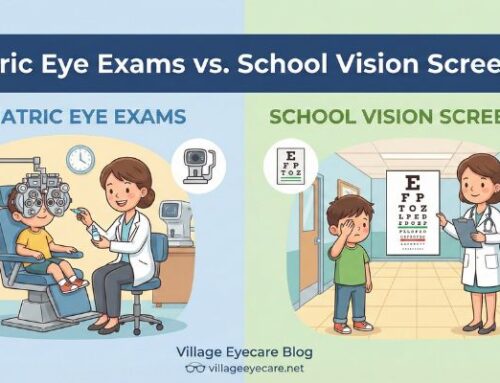
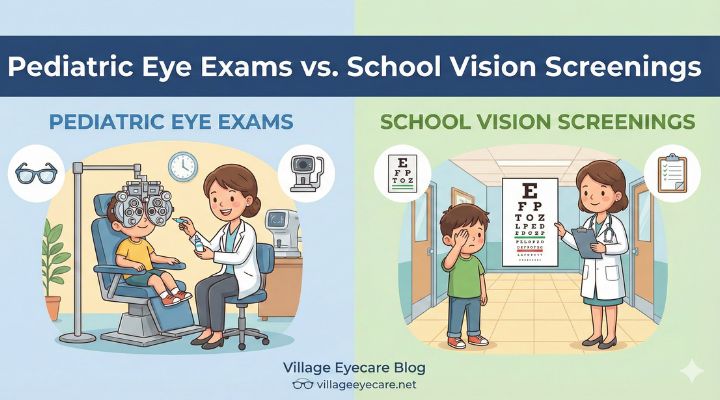
Many vision screenings at school only check for distance vision and do not evaluate eye teaming, tracking, or visual processing. This means a child can pass a screening yet still struggle with important visual skills needed for learning.
Because kids rarely complain, parents may not realize anything is wrong until the child falls behind academically or becomes frustrated with school.
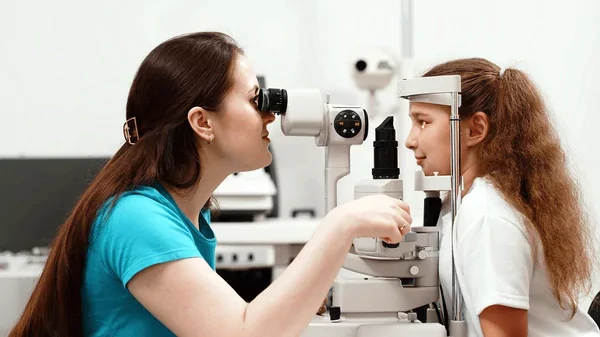
Regular comprehensive eye exams help catch these problems early and prevent them from impacting development.
Signs Your Child May Have an Undiagnosed Vision Problem
Parents should watch for behaviors such as:
- Avoiding reading
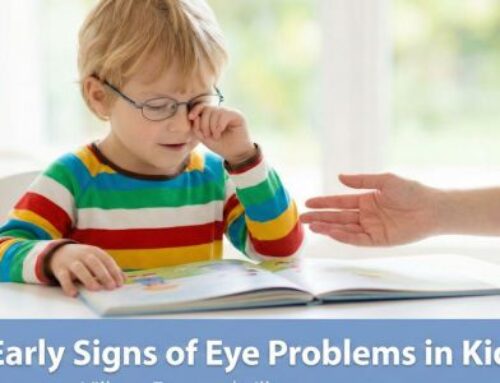
- Squinting or closing one eye
- Holding books or tablets very close
- Complaints of blurry words or headaches
- Losing place while reading
- Poor comprehension
- Difficulty copying from the board
- Slow homework completion
- Clumsiness or poor coordination
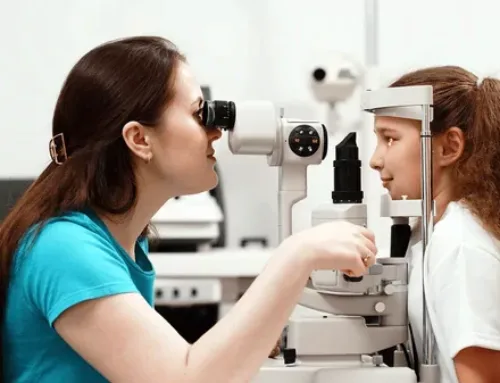
If you notice any of these, a full eye exam is the next step.
How Early Diagnosis Supports Healthy Development?
Identifying vision issues early allows children to learn with confidence, stay on track academically, and develop stronger visual skills.
The right treatment whether it’s glasses, contact lenses, vision therapy, or other interventions can dramatically improve:
- Reading speed and comprehension
- Attention and focus
- Fine motor skills
- Self-esteem
- Academic progress
Healthy vision is essential for healthy development.
The Bottom Line
Undiagnosed vision issues can deeply affect a child’s learning, behavior, and confidence but with early detection, these challenges are highly treatable.
Regular comprehensive eye exams are one of the simplest and most powerful ways to support a child’s educational success.